
Beep Beep! Navigating Lake Nona’s Futuristic Transit Access
Beep Beep! Navigating Lake Nona’s Futuristic Transit Access
Why Lake Nona Transit Access Is Redefining How a Community Moves
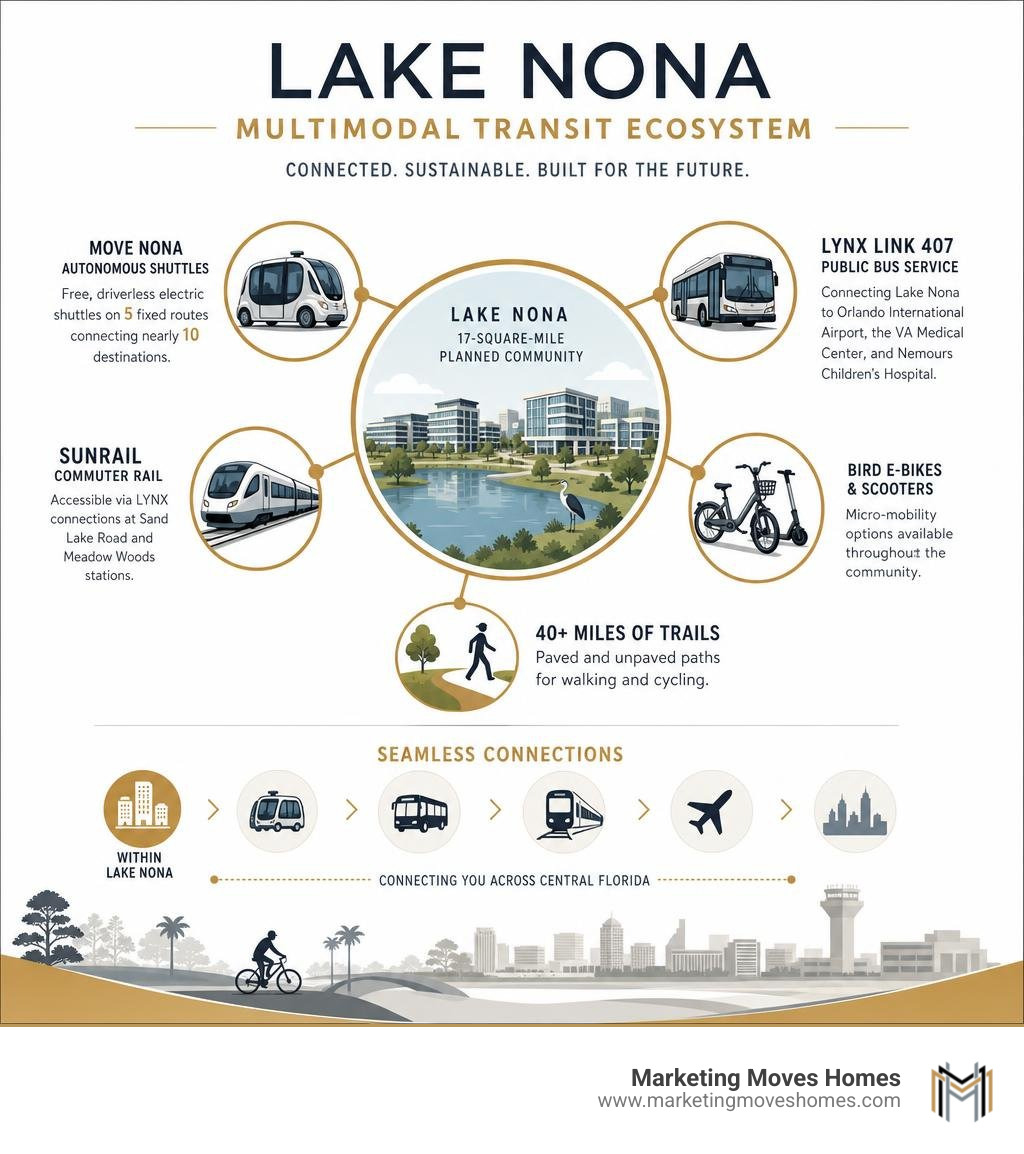
Lake Nona transit access is more varied and more forward-thinking than most people expect from a suburban Orlando community. Here is a quick snapshot of what is available right now:
- Move Nona autonomous shuttles — free, driverless electric shuttles on 5 fixed routes connecting nearly 10 destinations across the community
- LYNX Link 407 — public bus service connecting Lake Nona to Orlando International Airport, the VA Medical Center, and Nemours Children’s Hospital
- SunRail — commuter rail accessible via LYNX connections at Sand Lake Road and Meadow Woods stations
- Bird e-bikes and scooters — micro-mobility options available throughout the community
- 40+ miles of trails — paved and unpaved paths for walking and cycling
Despite all of this, Lake Nona is still a very car-dependent place. Around 97% of residents rely on a personal vehicle as their primary way of getting around. That is exactly why the community — and its partners — have invested heavily in building something different.
Lake Nona is a 17-square-mile planned community on the southeast edge of Orlando. It blends residential neighborhoods, medical campuses, schools, research clusters, and retail all in one place. Getting around within that community, and connecting it to the rest of Central Florida, has been a central challenge — and an ambitious experiment.
Since 2019, the Move Nona program has operated what is now recognized as the largest and longest-running single-site autonomous vehicle network in the United States, with over 40,000 rides provided to residents and visitors. That is not a short-term demo or a one-month pilot — it is nearly three years of real-world data from a living, growing community.
I’m Scott Brazdo MBA, Co-Founder of Marketing Moves Homes and a REALTOR® specializing in Lake Nona real estate, and understanding Lake Nona transit access is a key part of helping my clients evaluate this community as a place to live, buy, or invest. In the guide below, I will walk you through everything you need to know — from how the autonomous shuttles actually work to how you connect to the broader Central Florida transit network.
What is Move Nona? The Core of Lake Nona Transit Access
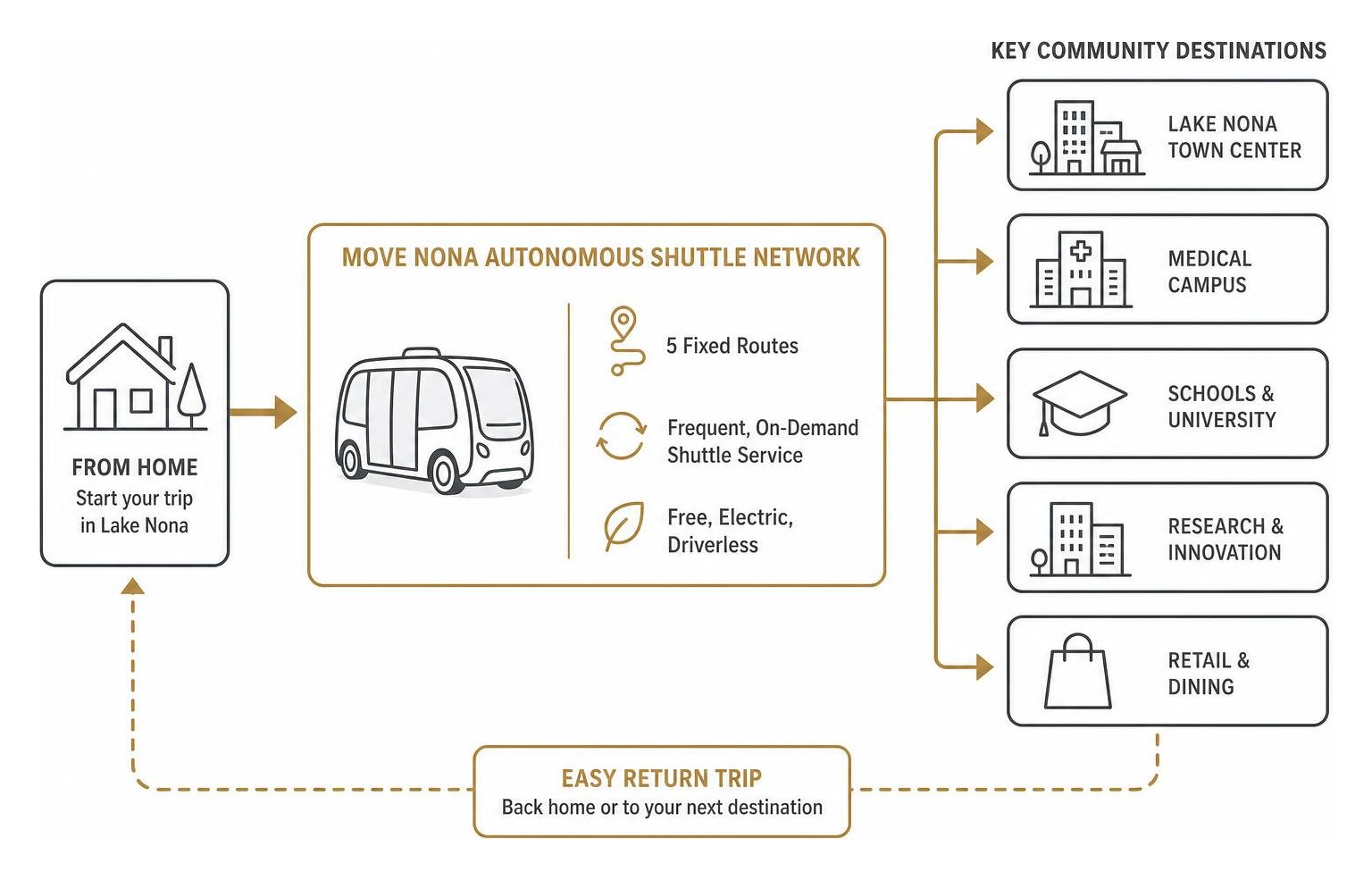
Move Nona is the signature transportation initiative in Lake Nona. Born from a partnership between Tavistock Development, the City of Orlando, and Orange County, it was designed to solve a classic suburban challenge: the “first-mile/last-mile” problem.
In many master-planned developments, even if you have great regional transit nearby, getting from your front door to the local town center or medical campus without starting your car is nearly impossible. Move Nona bridges this gap using a coordinated fleet of electric, driverless shuttles.
Instead of waiting for public infrastructure to slowly catch up to the rapid pace of development, the community’s planners decided to build a private-public testing ground for futuristic mobility. The service is operated by Beep, an Orlando-based autonomous mobility company that specializes in testing and deploying these cutting-edge networks. By integrating driverless technology into the daily lives of residents, Move Nona has shifted the conversation from “what if” to “what is.”
Shuttle Specifications and Fleet Operations
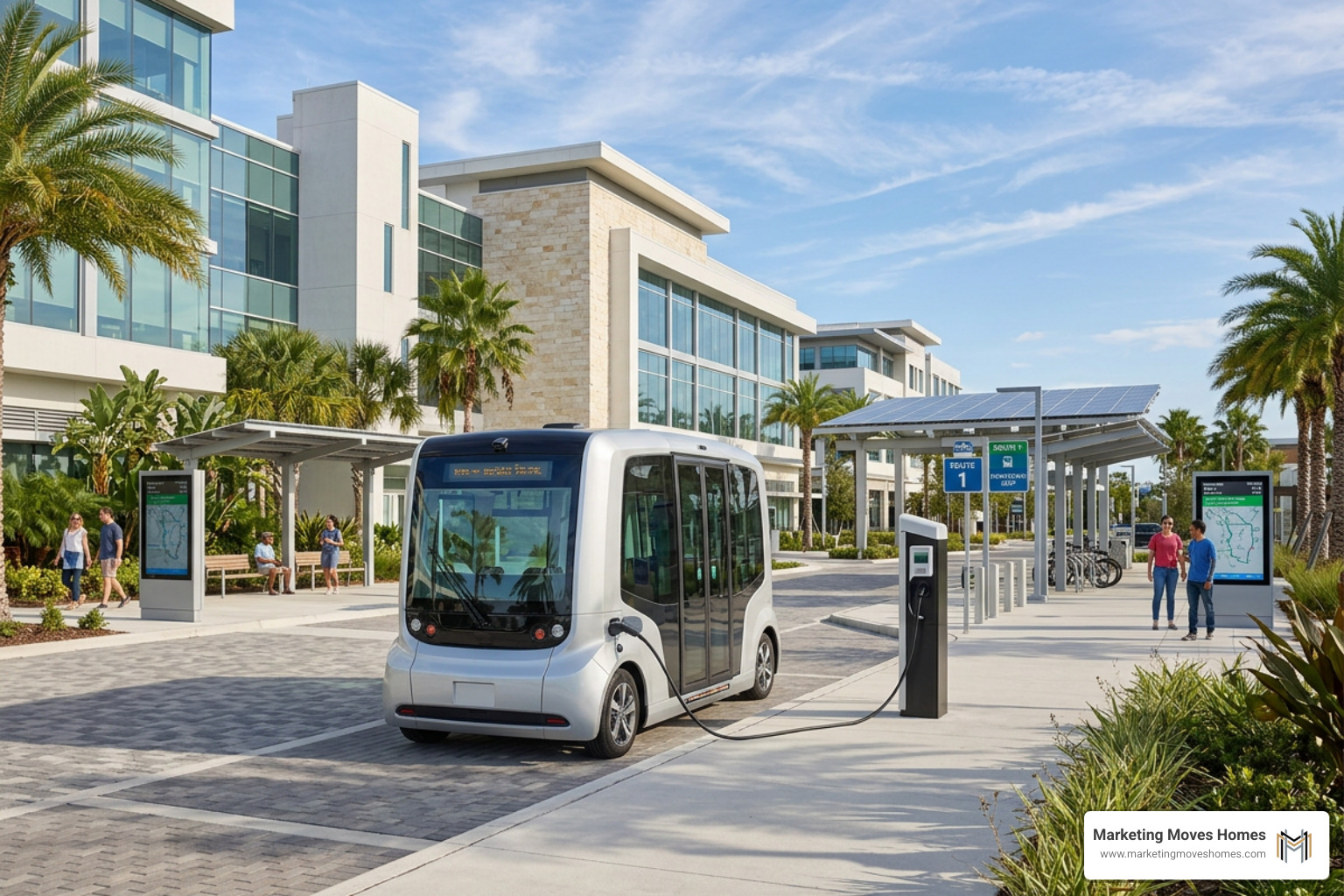
The heavy lifters of the Move Nona fleet are highly sophisticated electric autonomous vehicles (AVs), primarily manufactured by NAVYA. These shuttles are designed specifically for low-speed, high-frequency urban and suburban loops.
Here are the key specifications of the vehicles currently running on Lake Nona’s streets:
- Capacity: Each shuttle comfortably holds up to 10 passengers.
- Speed: The vehicles operate at a maximum speed of 15 miles per hour. While that might sound slow compared to your personal vehicle, it is the perfect speed for navigating busy community corridors safely while maintaining a smooth, predictable flow of traffic.
- Attendant Presence: Although the vehicles are driverless and navigate using advanced LiDAR, GPS, and camera systems, a trained Beep attendant is always on board. These attendants act as brand ambassadors, answer rider questions, and can take manual control of the vehicle using a controller if an unexpected obstacle arises.
- Accessibility: The shuttles are fully ADA compliant. A manual ramp is stored directly on board, allowing wheelchair users to board easily at any designated stop.
For a deeper dive into the specific vehicle mechanics and general guidelines, you can review the official AUTONOMOUS SHUTTLE SERVICE documentation.
Operating Hours, Fixed Routes, and the Ride Beep App
Move Nona does not operate like an on-demand ride-hailing service; instead, it functions like a localized train or bus system. The shuttles run on fixed routes with designated stops. This means you cannot simply wave one down on the side of the road—you must wait at a marked shuttle stop.
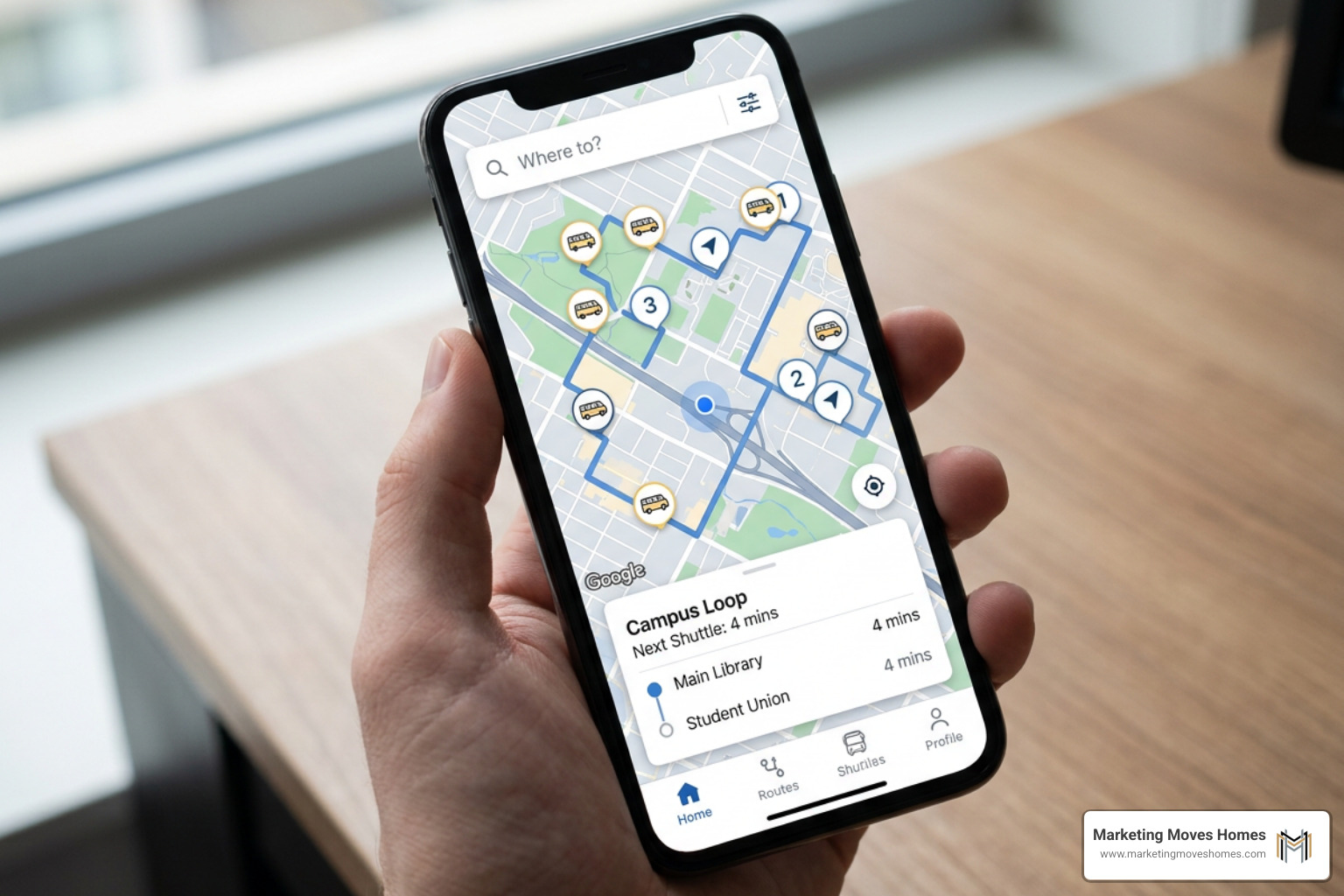
To make the system easy to use, Beep provides real-time tracking. Riders can download the Ride Beep App or access the rider portal to view live shuttle locations, see estimated arrival times, and check current operating schedules.
Because the service is funded through a partnership between Tavistock and Beep, rides are currently free for all passengers. There are no tickets to buy and no transit cards to scan. You simply walk up to a stop, wait for the shuttle (which typically arrives every 10 to 15 minutes), and hop on.
Scaling the Network: Routes, Funding, and the BUILD Grant
Operating a successful autonomous network across a rapidly growing 17-square-mile community requires serious planning and capital. What started as a single linear route has grown into a multi-route network that serves as a blueprint for smart cities nationwide.
The expansion of this network was supercharged when Orange County and the City of Orlando were awarded a $20 million federal BUILD (Better Utilizing Investments to Leverage Development) Grant from the U.S. Department of Transportation. This grant funded the Reimagining Mobility Project, a comprehensive $43 million initiative.
Of that total budget, approximately $12.6 million was allocated specifically to AV infrastructure, including dedicated lanes, advanced traffic signaling, and safety monitoring systems. The remaining funds were backed by private investments from Tavistock and local Community Development Districts (CDDs), showcasing how public and private sectors can collaborate to fund the future of public transit.
Comparing Move Nona to Other U.S. AV Deployments
Most autonomous vehicle projects in the United States are short-term demonstrations that run for a few weeks or months before packing up. Move Nona is entirely different. It is a permanent, daily fixture of the community.
To put the scale of Lake Nona’s program into perspective, let’s look at how it compares to other notable AV deployments across the country:
| Feature | Move Nona (Lake Nona, FL) | Columbus AV Circulator (Ohio) | SWAN Shuttle (Downtown Orlando) |
|---|---|---|---|
| Status | Active, permanent since 2019 | Completed (10-month pilot) | Active, localized loop |
| Fleet Size | 8 shuttles (expanding to 25) | 2–3 shuttles | 2 shuttles |
| Active Routes | 5 distinct routes | 1 route | 1 route |
| Total Rides | 40,000+ rides | ~15,000 rides | Localized downtown use |
| Funding Model | Federal BUILD Grant + Private | Smart City Challenge Grant | City of Orlando + LYNX |
The original Green Line route—a 1.2-mile linear path connecting residential neighborhoods to the Lake Nona Town Center—carried approximately 15,000 passengers in its first six months alone. Today, the system features five active routes, including the Yellow Line (serving Heroes Park and Nona Adventure Park) and the Blue Line (which loops through model home neighborhoods to give prospective buyers a taste of the community’s high-tech lifestyle).
Original Goals and Environmental Impact Metrics
The Reimagining Mobility Project was not built just because autonomous cars look cool. It was designed to address real environmental and infrastructure goals.
With 97% of Lake Nona residents driving cars, traffic congestion and carbon emissions are constant concerns as the area grows. The primary goals of the project include:
- Reducing Vehicle Miles Traveled (VMT): The target is to eliminate 2.5 million personal vehicle miles traveled annually by giving residents a viable alternative for local trips.
- Emissions Cuts: Replacing gas-powered car trips with zero-emission electric shuttles directly improves local air quality.
- First/Last-Mile Connectivity: Making it easy for residents to access regional bus routes without needing to park a car at a transit hub.
- Job Creation: Establishing Central Florida as a major hub for autonomous vehicle technology, engineering, and fleet management.
Looking ahead, the funded expansion plans aim to support a 25-shuttle fleet navigating more than 15 miles of dedicated multimodal paths.
Safety, Accessibility, and Multimodal Integration
Introducing driverless vehicles to public roads requires a massive commitment to safety. Before Move Nona launched, Beep and local officials coordinated with Orange County and City of Orlando emergency services to train nearly 100 first responders on how to safely interact with, disable, and manage autonomous vehicles in an emergency.
The shuttles are monitored 24/7 by the Beep Command Center. On-board cameras, GPS tracking, and vehicle diagnostics feed real-time data to off-site engineers who can intervene if necessary. For passengers, safety rules are straightforward: seatbelts are required, smoking and alcohol are strictly prohibited, and children under 16 must be accompanied by an adult.
Accessibility is another core pillar of the program. The manual wheelchair ramps and spacious interiors make the shuttles incredibly welcoming for ADA users.
If you are planning a move to the area, navigating these local transit options is just one piece of the puzzle. We recommend checking out our Ultimate Checklist for Lake Nona Real Estate to make sure your transition to this high-tech community is as smooth as possible.
Micro-Mobility and the Lake Nona Trail System
The autonomous shuttles do not work in a vacuum; they are part of a broader, highly integrated micro-mobility ecosystem. Lake Nona has partnered with Bird to offer a community-wide fleet of shared e-bikes and stand-up electric scooters. Residents can easily unlock these vehicles using the Bird smartphone app to zip between shuttle stops, offices, and residential pockets.
Supporting this is Lake Nona’s incredible physical infrastructure. Approximately 40% of the community’s 11,000 acres is dedicated to open green space, which includes over 40 miles of paved and unpaved trails. These paths are completely separated from heavy vehicle traffic, creating a safe, scenic network for pedestrians, runners, and cyclists alike.
Regional Connectivity: Linking Lake Nona to Central Florida
While getting around Lake Nona is a breeze, connecting to the rest of the greater Orlando metropolitan area is equally important. Whether you are commuting to a job in Downtown Orlando, heading to a show at the Getting Here | Dr. Phillips Center for the Performing Arts , or visiting historic Winter Park, regional transit connections are vital.
Lake Nona’s location immediately adjacent to Orlando International Airport (MCO) gives it a massive strategic advantage. Through a mix of municipal bus services, commuter rail, and high-speed train networks, residents can access the broader region with relative ease. For a complete look at how our local networks tie into regional goals, you can explore the resources provided by Transit | MetroPlan Orlando .
LYNX Link 407 and SunRail Connections
The primary public transit link connecting Lake Nona to the rest of Orange County is LYNX, Central Florida’s regional bus service. Specifically, LYNX Link 407 provides direct, reliable service connecting:
- Orlando International Airport (MCO)
- Lake Nona VA Medical Center
- Nemours Children’s Hospital
- Valencia College (Lake Nona Campus)
For detailed stop schedules and route maps, you can view the 407 Detail brochure. The standard one-way fare for a LYNX bus ride is Regular$2.00 , making it an incredibly affordable way to commute.
Additionally, LYNX bus routes connect Lake Nona residents to regional rail hubs. By taking Link 407 to connecting routes, riders can access the Sand Lake Road SunRail Station or the Meadow Woods SunRail Station. SunRail is Central Florida’s premier commuter rail line, operating along a 49-mile corridor that makes it easy to travel north into Downtown Orlando or south into Kissimmee.
To see how these local routes fit into the larger 10-year regional transit strategy, you can review the official Transit Development Plan .
Frequently Asked Questions About Lake Nona Transit Access
How does Lake Nona transit access connect to Orlando International Airport?
The easiest public transit connection is via LYNX Link 407. This bus route runs directly from the Lake Nona VA Medical Center and Nemours Children’s Hospital straight to Orlando International Airport (MCO). The trip is quick, highly affordable, and connects you directly to MCO’s main transit terminals, where you can also access the Brightline high-speed rail line.
Is there a cost to use the Lake Nona transit access shuttle network?
No! Rides on the Move Nona autonomous shuttles are completely free. The operational costs are fully covered through a private partnership between Tavistock Development and Beep, allowing residents and visitors to hop on and off without paying a fare.
What safety and ADA features are available on the Move Nona shuttles?
Every shuttle is equipped with seatbelts, real-time camera monitoring, and direct communication lines to the Beep Command Center. Additionally, a trained safety attendant is always on board. For ADA passengers, each shuttle features a manual wheelchair ramp that is easily deployed by the attendant.
Conclusion
Lake Nona is proving that suburban communities do not have to be entirely locked into traditional, car-congested designs. By combining autonomous shuttle fleets, extensive trail systems, and direct public transit links to Orlando International Airport and SunRail, the community is actively rewriting the playbook on modern urban mobility.
At Marketing Moves Homes, we are proud to be your local real estate experts. We don’t just sell houses; we help our clients find homes in communities that match their lifestyles. Whether you are looking for a high-tech smart home steps away from a Move Nona shuttle stop, or a quiet retreat close to the trails, we use advanced digital marketing, professional video tours, and deep local expertise to help you succeed.
If you are ready to explore the local market and find your dream home in this forward-thinking community, visit our home buying page to connect with our team today!